
Art Talks
White: Light, Silence, and Form in Modern Art
White is often mistakenly seen as an absence of color, yet in the hands of a skilled artist, it is arguably the most complex and evocative hue. Far from being a neutral background, white serves as a field of endless possibility, a tool for defining mood, texture, and light in contemporary painting and sculpture.
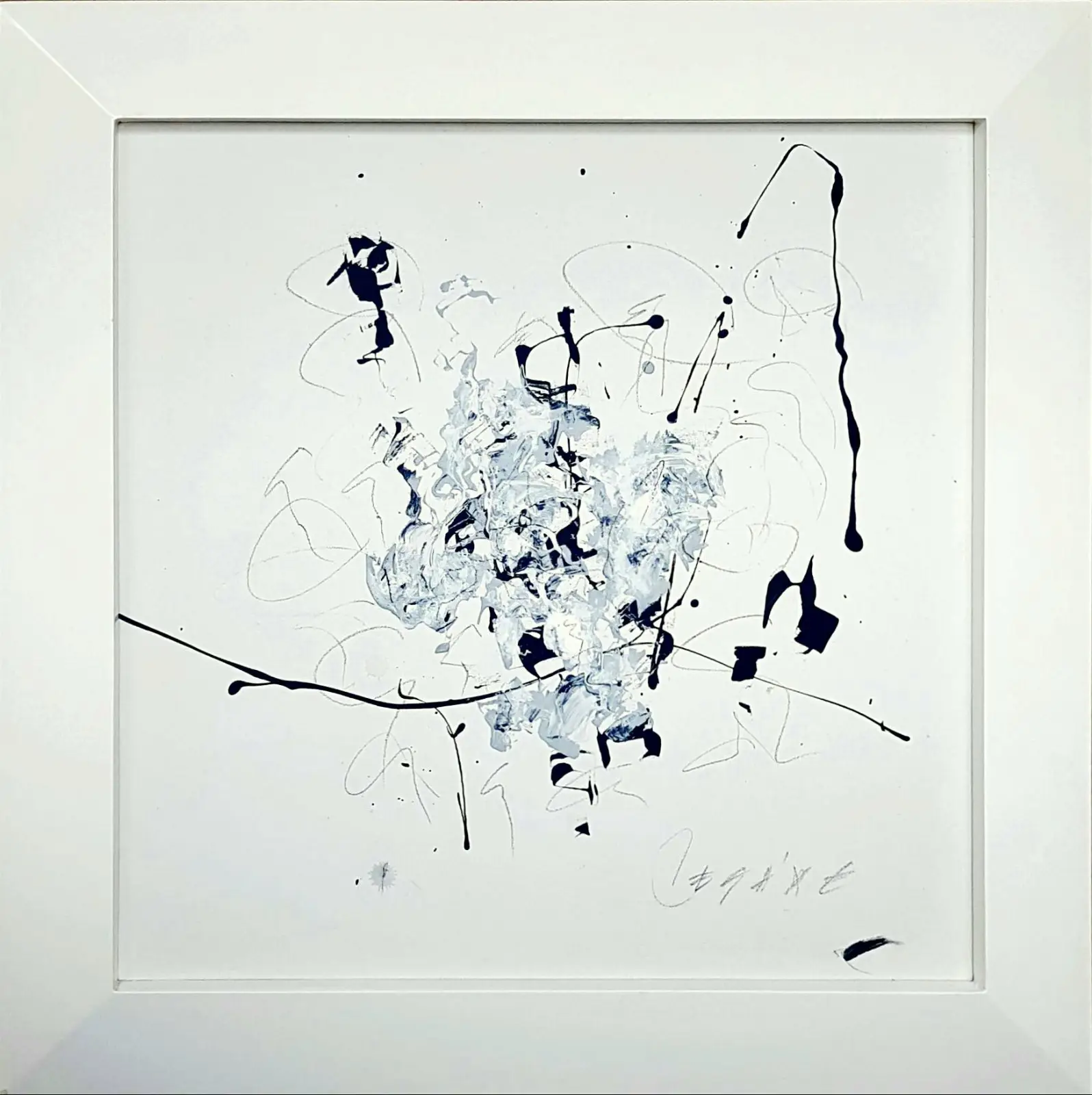
Acrylic and Pencil on Canvas, 24″ x 24″ (canvas size ) / Approx. 30″ x 30″ (framed size), 2013
Purity and Presence
Historically associated with purity, beginnings, and simplicity, white carries immediate cultural weight. In modern art, it sheds these literal associations to become an exploration of light itself. Artists use variations of white: from cool titanium to warm ivory or chalky zinc, to manipulate how ambient light interacts with the work. The subtle differences between these shades create depth and shadow, proving that white is not a single color but an entire spectrum.
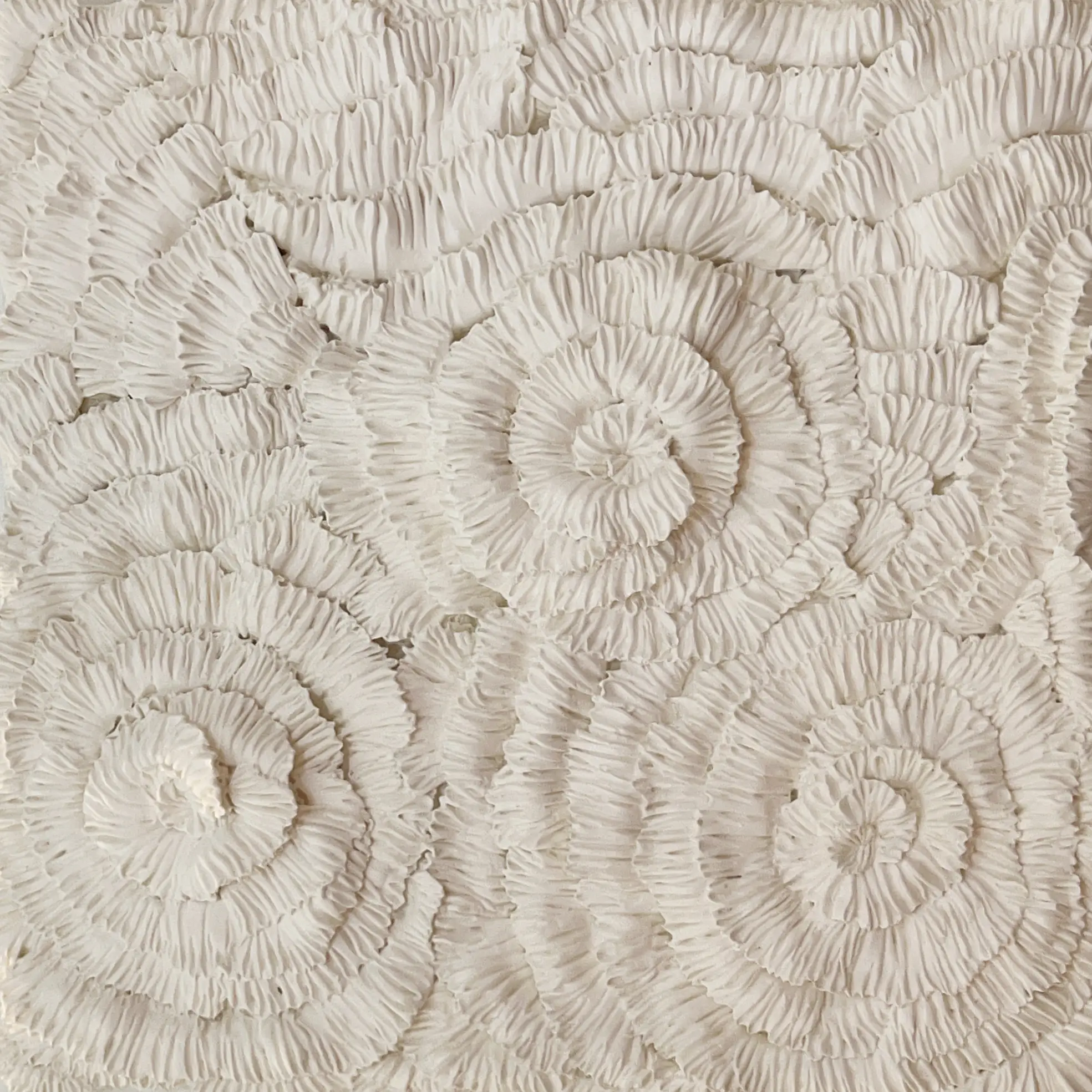
Mixed Media on Wood, 24″ x 24″, 2025
Texture and Tactility
For abstract artists, white is essential for maximizing texture. When applied in impasto layers or blended with gesso, it transforms from a flat pigment into a tactile, sculptural surface. The shadows created by thick ridges of white paint draw the viewer closer, inviting them to examine the physicality of the medium. This textural presence, often highlighted by soft, directional lighting, is a key characteristic of sophisticated modern abstraction.
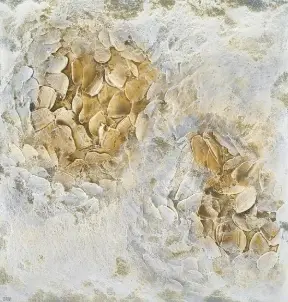
Acrylic, 36″ X 36″, 2025
Silence and Space
Perhaps the most powerful effect of white is its ability to introduce silence and space into a composition. In minimalist works, a dominant white field can feel meditative, pushing aside visual noise to focus the viewer’s attention on subtle details: a single line, a faint shape, or a tonal shift. This use of negative space can lend a profound sense of stillness and focus, allowing the artwork to breathe and command an entire wall without being loud.
Integrating White into Your Collection
Collecting white dominant artwork is a choice for versatility and impact. It harmonizes effortlessly with any color scheme and can act as an anchor in a busy interior, providing a point of calm reflection. Whether monochromatic or used as a counterpoint to sharp color, the strategic use of white is a hallmark of sophisticated artistry and intelligent collection building.
White is often mistakenly seen as an absence of color, yet in the hands of a skilled artist, it is arguably the most complex and evocative hue. Far from being a neutral background, white serves as a field of endless possibility, a tool for defining mood, texture, and light in contemporary painting and sculpture.
